

Missing several or all of the teeth can affect much more than a smile. It may make eating, speaking, and social situations feel more difficult. Fortunately, today’s dentures offer several ways to restore appearance and everyday function.
For patients researching dentures in Lorton, VA, the first step is understanding that dentures are not one-size-fits-all. Some rest on the gums and can be removed, while others connect to dental implants for additional stability. The right choice depends on oral health, jawbone structure, personal preferences, and budget.
This guide explains the most common options, what patients can expect, and how an oral surgeon may contribute to implant-supported treatment.
Dental care is individualized. This article provides general education and does not diagnose a condition or replace an examination by a dentist or oral surgeon.
What Are Dentures?
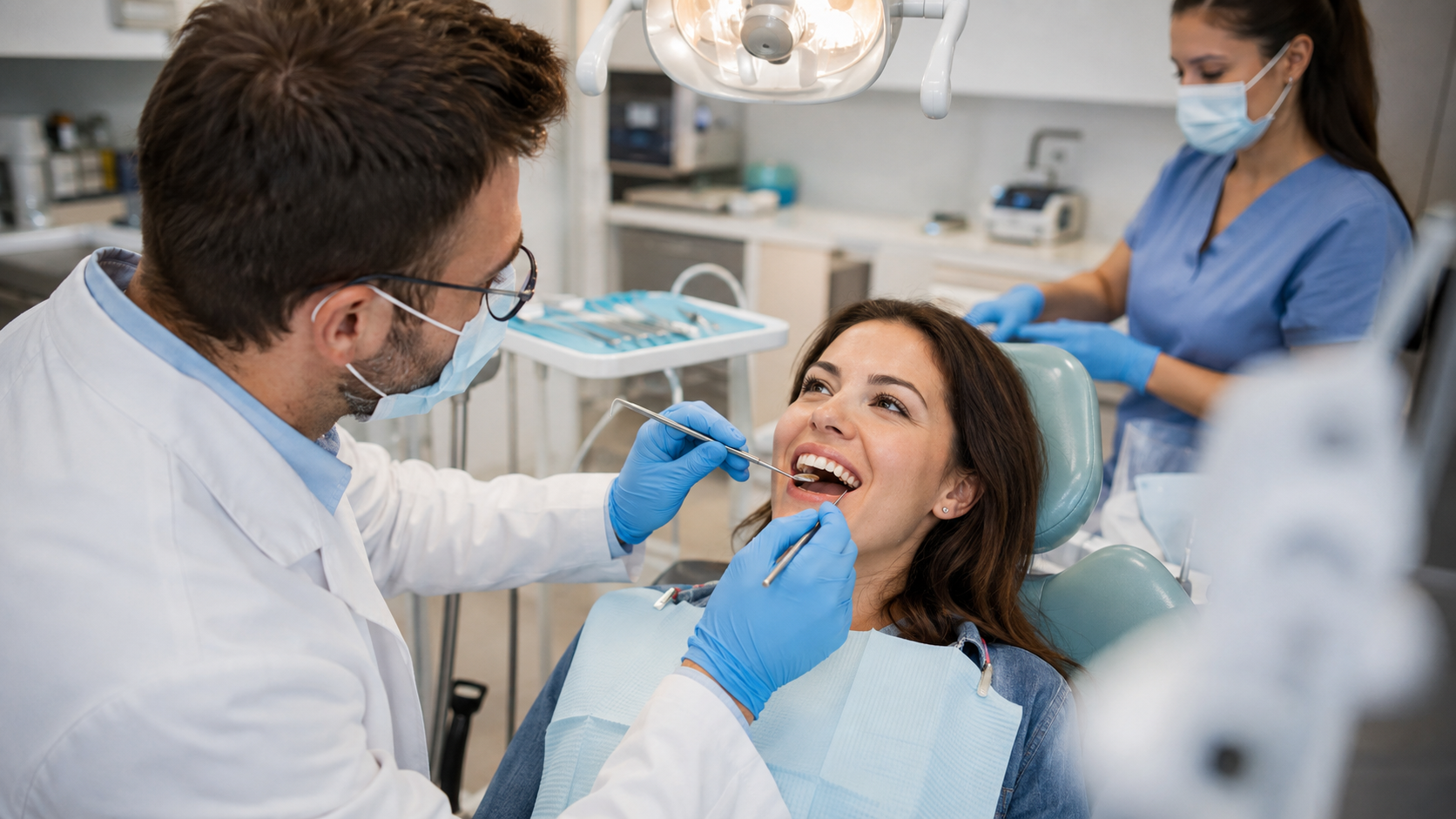
Dentures are custom-made appliances that replace missing teeth and some of the surrounding gum tissue. They are designed to support a person’s smile while helping with chewing and speech.
Modern dentures are generally made with tooth-colored materials attached to a gum-colored base. Careful planning allows the dental team to select a tooth shape, shade, and arrangement that complements the patient’s face and remaining teeth.
Although dentures can provide meaningful improvements, they do not feel exactly like natural teeth. New wearers usually need time and guidance to become comfortable speaking and eating with them.
Types of Dentures Available to Patients
Complete dentures
Complete, or full, dentures replace all the teeth in the upper jaw, lower jaw, or both. Conventional complete dentures rest on the gums and are removed for cleaning and sleeping.
An upper denture covers part of the roof of the mouth and may gain stability through suction. A lower denture has less surface area for support because it must leave room for the tongue. For that reason, some patients find lower dentures more challenging to keep stable.
Partial dentures
A partial denture may be appropriate when some healthy natural teeth remain. It fills the spaces created by missing teeth and typically uses clasps or other attachments to gain support from nearby teeth.
Partial dentures can also help keep the remaining teeth functioning together. The condition of those teeth and the surrounding gums must be evaluated before treatment begins.
Immediate dentures
Immediate dentures are prepared before tooth removal and placed soon after the teeth are extracted. This means the patient does not have to go without visible teeth during initial healing.
However, the gums and jaw naturally change shape as extraction sites heal. An immediate denture may therefore need adjustments, relining, or eventual replacement. Patients should not assume that the fit on the first day will remain the final fit.
Implant-supported overdentures
An implant-supported overdenture is removable but connects to dental implants placed in the jaw. The attachments can provide more retention than a conventional denture resting on the gums alone.
The patient can take the denture out for cleaning, but it typically feels more secure during daily use. The number and location of implants depend on the jawbone, the planned restoration, and the patient’s individual needs.
Fixed full-arch implant restorations
A fixed full-arch restoration replaces an entire row of teeth and is secured to dental implants. Patients do not remove it at home; a dental professional removes it when clinically necessary.
This option is sometimes described as a hybrid denture, although terminology can vary among practices. It is important to clarify whether a proposed restoration will be removable by the patient or fixed in place. Lorton & Springfield Dental Implant & Oral Surgery offers additional information about hybrid dentures and dental implants.
Conventional vs. Implant-Supported Dentures
| Feature | Conventional denture | Implant-supported option |
|---|---|---|
| Support | Rests mainly on the gums | Connects to implants in the jaw |
| Removal | Removed by the patient | May be removable or professionally removable, depending on the design |
| Surgery | Not needed solely to support the denture | Implant placement requires a surgical procedure |
| Cleaning | Cleaned outside the mouth | Care depends on whether the restoration is fixed or removable |
| Candidacy | Depends on oral tissues and restorative needs | Also depends on bone, health history, and implant risk factors |
Neither approach is automatically best for everyone. A conventional denture avoids implant surgery and may have a lower initial cost. An implant-supported design may improve retention, but it involves additional planning, maintenance, and expense.
Who May Be a Candidate for Implant-Supported Dentures?
Candidacy begins with a comprehensive evaluation. The dental team may review the patient’s medical history, medications, gum health, remaining teeth, bite, and available jawbone. Imaging can help an oral surgeon study the proposed implant sites and nearby anatomy.
Having lost bone does not always rule out implant treatment. In selected cases, bone grafting or another preparatory procedure may be considered. However, every additional procedure has its own benefits, limitations, recovery needs, and risks.
Health conditions, tobacco use, oral hygiene, and the ability to attend follow-up appointments can affect planning. Dental implants and their restorations also require ongoing maintenance. Published clinical literature recognizes potential surgical, soft-tissue, and mechanical complications, including inflammation and restoration-related problems. These possibilities should be discussed during informed consent rather than viewed as a prediction of any one patient’s outcome.
What to Expect During the Treatment Process
Consultation and planning
The process starts with a conversation about the patient’s concerns and goals. A clinical examination and appropriate imaging help determine whether teeth can be preserved, whether extractions are needed, and which denture designs may be reasonable.
At a first oral surgery visit, the surgeon can review the diagnosis, discuss relevant surgical options, and explain how care may be coordinated with the restorative dentist who designs or delivers the teeth.
Preparatory treatment
Some patients require tooth removal, treatment of active oral disease, or bone preparation before receiving their planned restoration. Others may proceed without these steps. The sequence should be personalized rather than based on a standard package.
Implant placement and healing
If implants are part of the plan, they are surgically positioned in the jawbone. Early symptom recovery—such as improvement in expected tenderness or swelling—is different from soft-tissue healing. Both are also different from osseointegration, the biological process in which bone forms a stable connection with the implant.
Completion of the final restoration is another separate milestone. A person may feel better well before an implant is ready to support its final teeth. The surgeon and restorative dentist determine the timing based on healing, implant stability, bone quality, and the restoration being planned.
Delivery and adjustment
Once the denture or implant restoration is delivered, adjustments may be needed to refine the bite and relieve pressure areas. Follow-up care is a normal part of the process, especially when oral tissues are still changing after extractions.
Getting Comfortable With New Dentures
A new denture can initially feel bulky or unfamiliar. Mild changes in speech and increased saliva may occur while the mouth adapts. Patients can often make the transition easier by:
- Starting with soft foods cut into small pieces
- Chewing slowly and using both sides of the mouth
- Practicing difficult words by reading aloud
- Following the dentist’s wearing and cleaning instructions
- Scheduling an adjustment instead of trying to reshape the denture at home
Persistent pain, open sores, ongoing bleeding, a sudden change in fit, or difficulty eating should be evaluated. A denture should not simply be “toughed out” when it repeatedly injures the gums.
How to Care for Dentures and Dental Implants
Removable dentures should be cleaned every day with products and methods recommended by the dental team. The gums, tongue, and any remaining teeth also need routine cleaning.
According to the American Dental Association’s denture care guidance, dentures should be kept in water or an appropriate cleansing solution when they are not being worn so they do not dry out. They should never be placed in hot or boiling water, which can affect their shape.
Fixed implant restorations require cleaning around and underneath the replacement teeth. Depending on the design and the patient’s dexterity, the dental team may recommend floss threaders, interdental brushes, or a water-flossing device.
Regular dental visits remain important even when no natural teeth are present. A clinician can examine the oral tissues, check the fit and condition of the prosthesis, and evaluate implants and attachments. Needing denture adhesive repeatedly to eat or keep a denture in place can be a reason to request a fit evaluation rather than simply using more adhesive.
Questions to Ask at a Denture Consultation
- Which teeth, if any, can reasonably be preserved?
- Would a complete, partial, immediate, or implant-supported denture fit the situation?
- Will the proposed restoration be removable or fixed?
- Who will perform the surgery and who will make the final teeth?
- Are extractions or grafting expected?
- What maintenance and future replacement costs should be anticipated?
- What are the main risks and alternatives?
- What will be worn while the mouth and implants heal?
A written treatment plan can make it easier to compare options. Patients should ask whether quoted fees include imaging, extractions, implants, temporary teeth, the final restoration, adjustments, and follow-up visits.
Frequently Asked Questions About Dentures
Will dentures look natural?
Dentures can be customized for tooth color, shape, size, and arrangement. The result depends on the clinical situation, materials, design, and collaboration between the patient, dentist, surgeon, and dental laboratory. Patients should discuss their preferences before fabrication begins.
Can someone sleep while wearing dentures?
Many removable-denture wearers are advised to take their dentures out at night so oral tissues can rest and the appliance can be cleaned. Individual instructions may differ after extractions or other procedures, so patients should follow their own clinician’s directions.
Do dentures require adhesive?
Some patients use a small amount of adhesive for added confidence, but adhesive should not serve as a long-term fix for a poorly fitting or damaged denture. Frequent loss of retention deserves a professional evaluation.
Can existing dentures be converted to implant-supported dentures?
Sometimes an existing denture can be modified, but not every appliance has the strength, fit, space, or design needed for implant attachments. The dentist and oral surgeon must assess the denture and implant plan before determining whether modification or replacement is appropriate.
Are implant-supported dentures permanent?
Implants are intended as a long-term foundation, but no implant or restoration can be guaranteed for life. Attachments, screws, denture teeth, and other components may wear or require maintenance. Daily hygiene and regular professional care remain essential.
How much do dentures cost in Lorton, VA?
Cost varies according to the type of denture, materials, number of implants, imaging, extractions, grafting, temporary teeth, and final restoration. Insurance coverage and financing also vary. An individualized examination is the most reliable way to receive a meaningful estimate.
Explore Denture and Implant Options in Lorton, VA
Choosing between conventional dentures, removable implant overdentures, and fixed full-arch teeth can feel overwhelming. A careful consultation helps turn those choices into a personalized plan based on health, comfort, function, and long-term maintenance.
Patients considering implant-supported dentures can contact Lorton & Springfield Dental Implant & Oral Surgery to ask questions or request an evaluation at its Lorton, VA location. The practice is located at 7764 Armistead Road, Suite 240A, Lorton, VA 22079. A consultation does not commit a patient to treatment; it provides an opportunity to understand the available options and make an informed next step.